
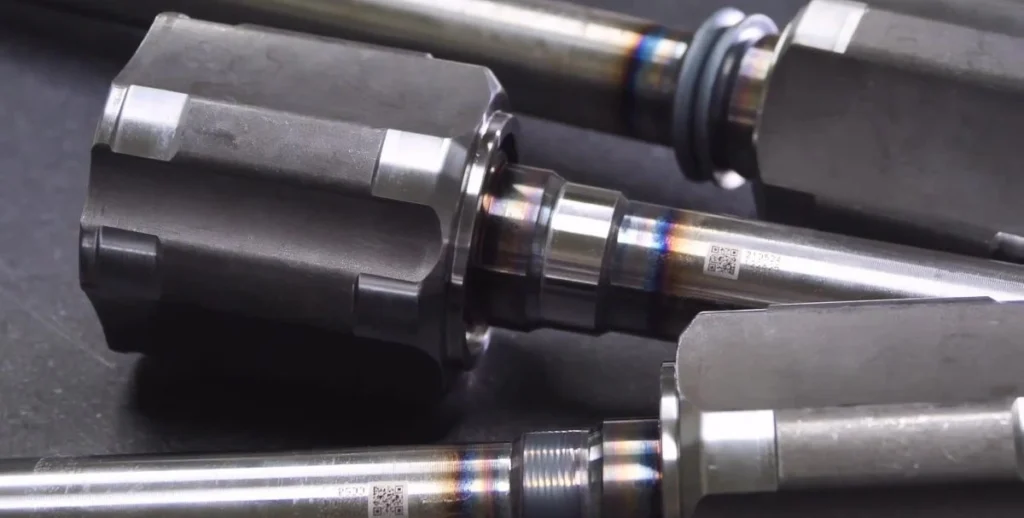
Friction welding is frequently employed in high-end manufacturing sectors such as aerospace due to its exceptional ability to join components while ensuring quality meets stringent standards. With its disruptive advantages, it is becoming an indispensable cornerstone in premium manufacturing.
For aerospace component manufacturers, whether purchasing friction welding equipment for in-house production or partnering with specialized friction welding service providers, both approaches represent optimal solutions for enhancing product quality and production efficiency.
Yet a question arises: Faced with multiple friction welding processes, how should engineers make the right choice? This article aims to thoroughly explain the three primary friction welding types and help you determine which method best suits your project. This will enable you to maximize production efficiency and truly unlock the core value of friction welding technology in high-end manufacturing.
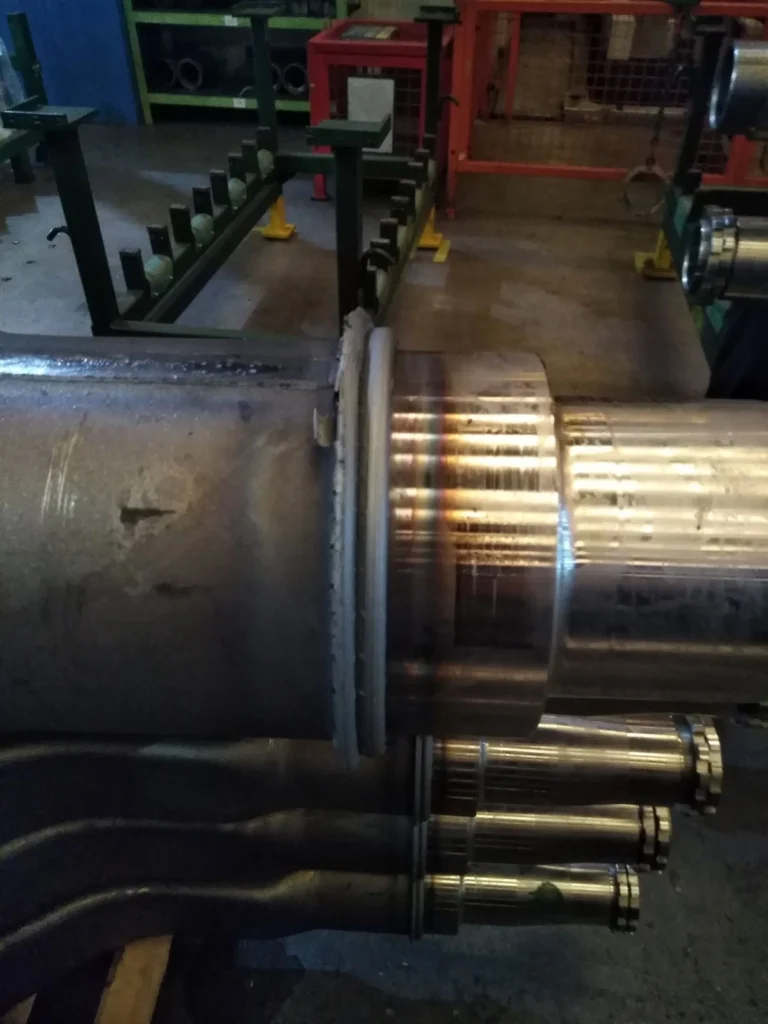
What are the key advantages of friction welding for aerospace applications?
Component connections in the aerospace industry are often subject to extremely high standards, and welded joints must be able to withstand extremely harsh environments. Friction welding is a solid-state welding process that can meet these manufacturing requirements.
Process Principles
Through mechanical friction motion, controlled heat is generated at the contact surface of the workpiece, bringing the metal to a thermoplastic state without melting. Under immense forging pressure, atomic diffusion and grain restructuring occur, ultimately forming a pure, dense, and high-strength integral joint.
Key Advantages
Before detailing each friction welding technique, let’s first discuss the overall advantages of Supro’s friction welding process:
- Extremely high weld strength, comparable to the base material.
- Excels not only in high-strength bonding between identical metals but also in perfect joining of dissimilar metals.
* Low distortion, high precision, and outstanding fatigue performance.
- Proven experience in high-quality welding of complex structural components.
- Enables high-quality, high-efficiency mass production.
- Helps partners effectively reduce costs and enhance production efficiency.
Additionally, Supro holds Nadcap and AS9100 certifications, confirming that all our parts and machinery meet the stringent quality and safety standards of the aerospace and related industries.
Now let’s explore each type of friction welding technology and its specific advantages.
Friction Stir Welding
The new solid-state welding process developed by TWI in 1991 once again revolutionized joining technology in industrial manufacturing. The principle involves a high-speed rotating stirrer generating friction heat with the workpiece to partially melt the welded material. As the tool advances along the weld line, the plasticized material flows from the tool’s leading edge to the trailing edge under rotational friction. This flow is then compacted by the tool’s pressure, forming a dense solid-state weld.
Key Advantages
Supro’s production quality meets aerospace standards, and our friction stir welding machines are recognized by numerous customers for the following key advantages:
Wide Material Compatibility
High-quality welding of lightweight metals including aluminum alloys, copper alloys, and magnesium alloys, enabling connections between same materials (e.g., aluminum to aluminum) or dissimilar materials (e.g., copper and aluminum alloy).
High Efficiency & Energy Savings
Welding efficiency is 2.5 times that of traditional equipment. This green process effectively reduces costs.
Superior Joint Quality
Joint strength approaches that of the base material. Seams are dense, highly corrosion-resistant, and exhibit excellent fatigue performance.
Aesthetic Weld Appearance
Achieves flawless welds on both long straight seams and complex curved surfaces. Surfaces are smooth, flat, and blemish-free, with uniform width and no cracks.
Application Scenarios
Friction stir welding can join components of various geometries, including:
- Butt joints
- Butt laminate
- Lap
- Lap laminate
- Butt Both Sides
- T-butt
Typical applications include:
Aerospace: Wing integrated panels, rocket fuel tanks
New energy vehicles: Battery pack housings, water-cooled plates
Marine: Decks, bulkheads
Construction: Aluminum alloy curtain walls, large decorative bridge components
Rotary Friction Welding
It is the earliest developed process among the main types of friction welding. Having evolved to a highly mature state today, it continues to undergo constant innovation.
The working principle involves one component rotating at high speed and pressing against another stationary component. The resulting friction heats the components, forging them together.
Based on different methods of energy input, it can be further classified into: Inertial friction welding and Continuous drive friction welding.
Key Advantages
Supro’s rotary friction welding machines strictly adhere to aerospace quality standards, with technology trusted throughout the industry. Their proven, mature processes, validated over many years, provide reliable assurance for the efficient production of axisymmetric components.
Key advantages include:
Exceptional joint quality
High-quality joints that effectively preserve the properties of the base materials.
Highly efficient automated production lines
Mature automated production lines significantly reduce labor hours while enabling high-efficiency manufacturing.
Process stability and controllable costs
Mature technology facilitates recording and tracing process parameters, enabling easy monitoring and control to ensure consistent product quality.
Outstanding cost control
Low energy consumption, robust equipment design, and minimal maintenance requirements.
Application Scenarios
Leveraging extensive practical experience with rotary friction welding machines, we have compiled their typical application scenarios and welded components as follows:
Aerospace: Aircraft hook bolts, landing gear assemblies
Automotive: Drive shafts, steering shafts
Medical: Precision diagnostic equipment, implantable medical devices
Oil exploration: Drill pipes, oil drilling casing
Capable of joining components with various geometries, including:
- Tube-to-tube
- Tube-to-plate
- Tube-to-bar
- Tube-to-disc
- Bar-to-bar
- Bar-to-plate
We Offer Financial & Superior Services
A small river named Duden flows by their place and supplies it with the necessary
regelialia. It is a paradisematic country, in which
Linear Friction Welding
When dealing with extremely complex structural components, this process demonstrates extraordinary advantages, offering a revolutionary solution for the integrated manufacturing of critical parts such as aircraft engines.
The working principle of linear friction welding involves one workpiece performing high-frequency linear reciprocating motion against the contact surface of another workpiece, generating heat through friction. When the contact surface reaches a thermoplastic state, immense forging pressure is immediately applied to achieve metallurgical bonding of the materials in the solid state.
Key Advantages
Its core advantage lies in solving manufacturing challenges beyond the reach of traditional welding, specifically:
Overcoming geometric limitations
Capable of welding complex three-dimensional, non-axisymmetric components, enabling high-level component integration.
Unparalleled Joint Performance
Features fine-grained weld zones with superior mechanical properties, high fatigue strength, and exceptional integrity.
Precise and Controllable Thermal Process
Minimizes heat-affected zones in base materials, effectively preserving the original properties of expensive materials.
Revolutionary Structural Weight Reduction
Replaces traditional heavy bolted connections or solid forging, significantly improving thrust-to-weight ratios—a cornerstone for breakthroughs in next-generation aircraft performance.
Application Scenarios
The following are typical application scenarios and welded components:
Aerospace: Engine blade discs, aircraft complex structural components
Oil exploration: Drill pipes, track rollers
Industrial: Engineering cylinders, turbochargers
Marine: Hull structural components, propulsion system parts
How to Select the Most Suitable Friction Welding Process?
Now that you understand the respective advantages of these three friction welding processes, how can you match the most suitable process for your aerospace project? Consider the following approach:
Four-Step Evaluation Method
Determine the component geometry
Confirm the core material type
Define performance and budget requirements
Consult experts for feasibility validation
Perfect Material-Process Matching
friction stir welding
High-strength aluminum alloys (Series 2, Series 7), titanium alloys, etc.
rotary friction welding
Carbon steel, high-strength steel, stainless steel, nickel-based superalloys, etc.
linear friction welding
Titanium alloys, nickel-based superalloys, etc.
Contact Supro-mfg
In the aerospace manufacturing sector, where precision and reliability are paramount, selecting the right friction welding process is not a simple choice. It requires comprehensive consideration of critical factors such as design, materials, performance, and cost.
Yet real-world applications are often complex. Your component may fall between two processes, or you may be pursuing an unprecedented innovation with no existing reference points.
This is precisely where Supro’s value lies. We offer far more than just equipment—we provide deep expertise and partnerships rooted in aerospace manufacturing, committed to being the best supplier of aerospace friction welding solutions.
Our team of application engineers is eager to tackle your challenges alongside you. From initial process feasibility analysis to critical prototype testing and final full-scale production implementation, Supro stands with you to ensure your project achieves the most optimized and reliable aerospace welding solution.